
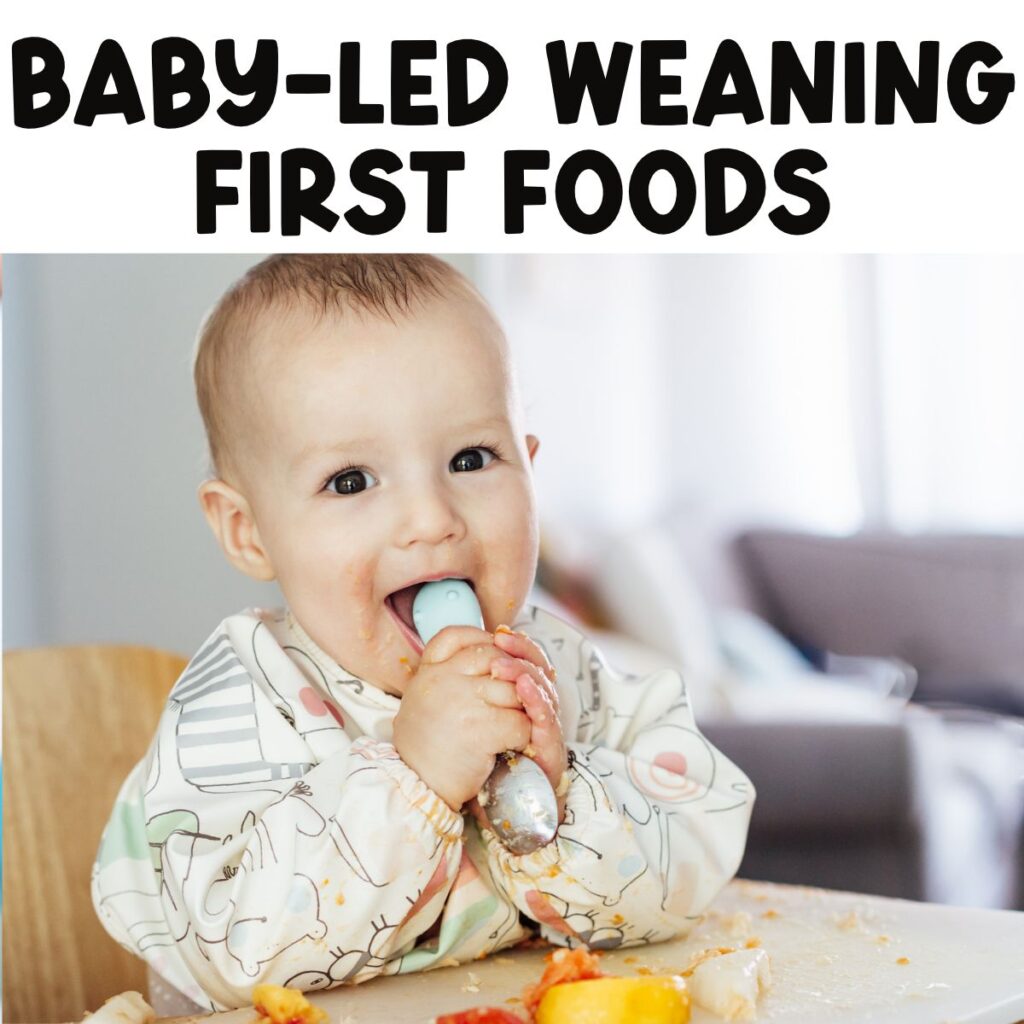
Starting solids at 6 months? These baby-led weaning foods, simple recipes, and meal ideas will help you feel more confident feeding your baby.
Starting solids is exciting, but it can also be a little terrifying. Is your baby going to choke? Are you cutting the food correctly?
And how is someone with barely any teeth supposed to eat a piece of sweet potato?
If you’re feeling overwhelmed by baby-led weaning, you’re definitely not alone!
The good news is that baby-led weaning can be much simpler than it looks.
You don’t need complicated recipes, special ingredients, or a different meal for your baby every night.
In this guide, you’ll find 32 easy baby-led weaning first foods and recipes, plus tips for preparing food safely, meal ideas for 6 to 12 months, and ways to make feeding your baby a little less stressful.
Whether you’re starting with avocado and banana or ready to try pancakes and meatballs, there’s plenty here to help you get started.
This post is for general informational purposes and isn’t a substitute for medical advice. Always talk with your pediatrician about your baby’s individual feeding needs and readiness for solids.
How to Start Baby-Led Weaning
Baby-led weaning (BLW) is a method of introducing solid foods that lets your baby feed themselves instead of relying entirely on spoon-fed purees.
You offer appropriately prepared, soft foods that your baby can pick up, explore, and bring to their mouth at their own pace.
It’s a little messy, but it gives babies opportunities to practice handling food and develop their eating skills.
When can babies start baby-led weaning?
Most babies are ready to begin solids at around 6 months old, but age isn’t the only thing that matters.
According to the CDC, signs that your baby may be ready include:
- Sitting upright with support and maintaining good head control.
- Bringing toys or other objects to their mouth.
- Reaching for and grasping objects.
- Showing interest in food.
- Being able to swallow food rather than automatically pushing it out.
Babies develop at different rates, so don’t worry if your little one isn’t ready on their exact 6-month birthday.
If your baby was born prematurely, has swallowing difficulties, or has developmental or medical concerns, ask your pediatrician when and how to start solids.
How should you cut food for baby-led weaning?
One of the biggest questions parents have is how to cut food so their baby can eat it safely.
For babies just starting out, many soft foods work well in long, finger-shaped pieces that are easy to grip with a little sticking out of their fist.
For beginners around 6 months: Offer very soft, graspable pieces, such as well-cooked sweet potato sticks or ripe avocado wedges. Pieces should squash easily, and the shape must suit the particular food.
As your baby develops a pincer grasp: Offer appropriately sized, soft pieces they can pick up between their thumb and finger. Continue modifying foods that are round, firm, sticky, or otherwise hazardous.
Always consider texture and shape together. A long piece isn’t automatically safe, and round foods such as grapes and cherry tomatoes need special preparation.
Gagging vs. choking during baby-led weaning
This is probably the scariest part of starting baby-led weaning, especially with your first baby.
Gagging is a normal protective reflex as babies learn to move food around their mouths, but it’s important to know the difference between gagging and choking.
| Gagging | Choking |
|---|---|
| Often noisy, with coughing or retching | May be silent or involve ineffective coughing |
| Baby may push their tongue forward | Baby may be unable to cry, cough, or breathe |
| Baby may turn red or have watery eyes | Baby may show difficulty breathing or color changes |
| Baby is moving air | Airway may be blocked |
If your baby is gagging and breathing effectively, remain calm and watch closely rather than reaching into their mouth.
Choking is an emergency. If your baby cannot breathe, cry, or cough effectively, begin age-appropriate infant choking first aid and have someone call 911. Avoid blind finger sweeps.
Consider taking an infant CPR and choking first-aid class before starting solids.
6 tips for your baby’s first week of baby-led weaning
- Start with one simple food. Soft sweet potato or avocado is an easy place to begin.
- Keep portions small. A couple of pieces is plenty for a first experience.
- Choose a relaxed time. Try solids when your baby is alert and not overly hungry or tired.
- Sit together. Let your baby watch you eat and practice chewing.
- Expect a mess. Touching, squishing, and dropping food are all part of learning.
- Keep milk feedings going. Breast milk or infant formula remains a major source of nutrition during the first year.
Always feed your baby seated securely upright in a high chair and supervise them closely throughout the meal. Never offer food while they’re reclining, crawling, riding in a stroller, or sitting in a car seat.
20 Best First Foods for Baby-Led Weaning (6 Months)
The best baby-led weaning first foods are soft, easy to handle, and simple to prepare.
You can start with fruits and vegetables, but be sure to introduce iron-rich foods early too.
Babies need dietary iron as they begin solids, so foods like meat, eggs, beans, and iron-fortified cereals deserve a place alongside those colorful fruits and vegetables.
Here are 20 baby-led weaning foods that work well for beginners when prepared appropriately.
1. Sweet potato sticks
Sweet potatoes are a great first food because they’re naturally sweet and soften beautifully when cooked.
Peel and cut into thick finger-shaped sticks, then steam or roast until they’re soft enough to mash easily with a fork. Skip added salt.
2. Ripe banana
Bananas are one of the easiest baby-led weaning foods because there’s no cooking required.
Choose a very ripe banana and offer a large, soft section your baby can grip, or split it lengthwise into manageable spears. Avoid firm, slippery round slices.
3. Avocado wedges
Avocado is packed with healthy fats and has a naturally soft texture.
Slice a ripe avocado into thick wedges that your baby can hold. If the pieces are slippery, a light coating of finely ground, iron-fortified infant oat cereal can make them easier to grip.
4. Steamed broccoli
Broccoli florets come with their own little handles, which makes them convenient for babies learning to grab food.
Steam the broccoli until the stem and florets are very soft. Leave enough stem attached for your baby to hold.
5. Scrambled eggs
Eggs provide protein and important nutrients, and they’re easy to prepare for the whole family.
Cook them thoroughly until just set and soft, then offer moist, graspable pieces or strips of a cooked omelet.
Egg is also a common allergen, so introduce it in an age-appropriate form and watch for a reaction.
6. Soft pear slices
Ripe pears are naturally sweet and make a nice change from bananas.
Offer very soft, peeled pear wedges. If your pear is firm or crisp, cook it until tender instead of offering it raw.
7. Steamed carrots
Carrots are inexpensive, easy to find, and great for practicing self-feeding.
Cut them lengthwise into narrow sticks and steam until completely soft. Never offer hard, raw carrot sticks to a baby.
8. Butternut squash
Butternut squash is another easy vegetable that becomes wonderfully soft when cooked.
Peel, remove the seeds, and roast or steam thick sticks until tender. You can prepare extra squash for the rest of the family at the same time.
9. Soft-cooked apple wedges
Apples are a convenient first food, but raw apple pieces are a choking hazard for young babies.
Peel and cook thick wedges in a little water until they’re very soft. Add cinnamon for flavor without using added sugar.
10. Cauliflower florets
Cauliflower is mild enough to pair with almost anything, making it a useful baby-led weaning vegetable.
Steam large florets until very soft, leaving a small stem for gripping.
11. Ripe peach slices
Soft peaches are a delicious option when they’re in season.
Remove the pit and offer soft, ripe wedges with the skin removed if it’s tough. Firm peaches should be cooked until soft.
12. Zucchini sticks
Zucchini cooks quickly and has a mild flavor that works with lots of family meals.
Slice it lengthwise into thick sticks and cook until soft. Avoid leaving it crunchy.
13. Soft-cooked green beans
Green beans can be a convenient finger food when cooked properly.
Steam them until very tender and flatten or split them lengthwise as appropriate. Remove any tough strings.
14. Well-cooked pasta
Pasta is a great way to introduce different shapes and textures once your baby is ready.
Cook pasta until very soft and choose shapes your baby can grasp safely. Toss with a little olive oil or unsalted tomato sauce.
15. Soft chicken
Chicken is a source of protein, iron, and zinc, making it worth introducing early.
Offer moist, finely shredded, fully cooked chicken in a form your baby can safely manage, rather than dry or chewy chunks. Mix with a little unsalted sauce or mashed vegetable to keep it moist.
16. Soft lentil patties
Lentils are an affordable source of plant-based protein and iron.
Cook lentils until very soft, mash them, and form them into tender patties that hold together without becoming dry or crumbly.
17. Soft-cooked salmon
Salmon adds protein and healthy fats to your baby’s meals.
Cook it thoroughly, remove every bone and the skin, then serve moist, soft flakes or a tender patty appropriate for your baby’s eating skills. Introduce fish as a potential allergen.
18. Soft tofu strips
Tofu is an easy, quick option for a baby-led weaning meal, particularly if your family doesn’t eat much meat.
Choose soft or medium-firm tofu that holds together but is easy to mash, and cut it into appropriate graspable pieces. Soy is a common allergen.
19. Ripe mango
Mango is naturally sweet, colorful, and fun for babies to explore.
Choose a very ripe mango and remove the skin and pit. Serve soft, graspable pieces, taking care with the slippery texture.
20. Iron-fortified oatmeal
Oatmeal is a useful first food, especially when you choose an iron-fortified baby cereal.
Prepare a thick, smooth oatmeal with breast milk, formula, or water and let your baby practice with a preloaded baby spoon.
This isn’t a traditional finger food, but self-feeding with a preloaded spoon fits nicely into a flexible baby-led approach.
Safety reminder: These foods are starting ideas, not guarantees against choking. Adjust the preparation to your baby’s developmental abilities and ask your pediatrician or feeding specialist about any swallowing or feeding concerns.
12 Easy Baby-Led Weaning Recipes & Meals
Once your baby is comfortable exploring individual foods, you can start combining ingredients into simple baby-led weaning recipes.
You don’t have to become a baby-food chef, either. Many of these recipes use ingredients you probably already have in your kitchen.
Always introduce common allergens individually before combining them in recipes, and make sure finished foods are soft and appropriately shaped for your baby.
21. Two-ingredient banana pancakes
These easy baby-led weaning banana pancakes are perfect for breakfast and don’t require flour or added sugar.
Ingredients:
- 1 ripe banana
- 2 eggs
Instructions: Mash the banana, whisk in the eggs, and cook small pancakes in a lightly greased nonstick skillet until fully set on both sides.
Serve soft finger-length strips or appropriately sized pieces. Refrigerate or freeze extras for another morning.
22. Sweet potato pancakes
Sweet potato pancakes are soft, naturally sweet, and a great way to use leftover cooked sweet potatoes.
Ingredients:
- 1/2 cup mashed cooked sweet potato
- 1 egg
- 1/4 cup oat flour
- A pinch of cinnamon
Instructions: Mix everything together and cook small pancakes over medium-low heat until cooked through and set in the center.
Offer soft strips once cooled. Add a little water if the batter seems too thick.
23. Baby-friendly oatmeal muffins
Homemade baby-led weaning muffins are easy to batch-cook and can make mornings much less stressful.
Ingredients:
- 2 ripe bananas
- 2 eggs
- 1 cup oat flour
- 1/2 teaspoon baking powder
- 1/2 teaspoon cinnamon
Instructions: Mash the bananas, combine with the remaining ingredients, and divide into a lightly greased mini muffin pan.
Bake at 350°F for approximately 12 to 16 minutes, until fully cooked. Let cool and check that the texture is moist, soft, and easy to mash rather than dry or crumbly before serving.
24. Soft turkey meatballs
Turkey meatballs are a convenient make-ahead baby-led weaning dinner and a useful source of iron and protein.
Ingredients:
- 1 pound ground turkey
- 1 egg
- 1/3 cup finely ground oats
- 1/4 cup finely grated zucchini
Instructions: Mix the ingredients, form small meatballs, and bake at 375°F until the centers reach 165°F.
Keep them moist with an unsalted tomato or vegetable sauce. Break or flatten them into soft, manageable pieces rather than serving firm, round meatballs whole.
25. Broccoli and cheese egg strips
This easy recipe works for breakfast, lunch, or dinner.
Ingredients:
- 2 eggs
- 2 tablespoons finely chopped, very soft broccoli
- 1 tablespoon shredded low-sodium cheese
Instructions: Whisk everything together, pour into a lightly greased skillet, and cook until the egg is completely set.
Cut the omelet into soft, finger-shaped strips for beginners.
26. Apple cinnamon oat pancakes
These naturally sweet pancakes are a great way to use apples without serving them raw.
Ingredients:
- 1/2 cup unsweetened cooked apple puree
- 1 egg
- 1/3 cup oat flour
- A pinch of cinnamon
Instructions: Combine the ingredients and cook small pancakes in a nonstick skillet until thoroughly cooked.
Let cool and serve soft strips that your baby can pick up.
27. Spinach and sweet potato fritters
These soft vegetable fritters make it easy to offer more than one vegetable at a meal.
Ingredients:
- 1 cup mashed cooked sweet potato
- 1/4 cup finely chopped cooked spinach, squeezed dry
- 1 egg
- 1/4 cup oat flour
Instructions: Mix together, form flattened patties, and cook in a lightly oiled skillet until completely cooked and holding together.
Make sure the fritters remain soft and moist, and adjust their size and texture for your baby.
28. Lentil and carrot patties
These dairy-free baby-led weaning patties are an affordable meat-free meal option.
Ingredients:
- 1 cup cooked, very soft lentils
- 1/4 cup finely grated, cooked carrot
- 2 tablespoons oat flour
- 1 tablespoon olive oil
Instructions: Mash the lentils and carrots together, stir in the flour and oil, and form small flattened patties.
Bake at 375°F until the patties hold together, adding a little water if needed to keep the centers soft. Serve in a texture that breaks apart easily.
29. Salmon and potato cakes
Salmon cakes are a nice option when you want to include fish in your baby’s meals without preparing a separate dinner.
Ingredients:
- 1/2 cup fully cooked, boneless salmon
- 1/2 cup mashed cooked potato
- 1 egg
- 1 tablespoon finely chopped parsley, optional
Instructions: Check carefully for bones, mash everything together, and form flattened cakes.
Cook until the egg is fully set and the cakes are cooked through. Serve soft, moist pieces rather than dry or crispy patties.
30. Banana and peanut butter oatmeal
This is a quick baby-led weaning breakfast you can prepare in just a few minutes.
Ingredients:
- 1/4 cup dry, iron-fortified infant oat cereal or appropriately prepared oats
- 1/4 mashed ripe banana
- A small amount of smooth peanut butter, thinned thoroughly
Instructions: Prepare the cereal or oats with water, breast milk, or formula until soft and thick, then stir in the banana and sufficiently thinned peanut butter.
Offer it on a preloaded spoon and let your baby bring the spoon to their mouth. Never serve thick globs of peanut butter.
31. Soft chicken and sweet potato patties
These easy patties combine an iron-containing protein with a vegetable your baby may already enjoy.
Ingredients:
- 1/2 cup finely shredded, fully cooked chicken
- 1/2 cup mashed cooked sweet potato
- 1 egg
- 2 tablespoons oat flour
Instructions: Mix everything together, form thin patties, and cook in a lightly greased skillet until the egg is fully cooked.
Make sure the chicken is finely shredded and the finished patties are soft and moist enough to break apart easily.
32. Blueberry banana mini muffins
These mini muffins are a handy baby-led weaning snack or breakfast addition, especially when you make a batch ahead of time.
Ingredients:
- 1 ripe banana
- 1 egg
- 3/4 cup oat flour
- 1/4 cup plain, unsweetened yogurt
- 1/4 cup blueberries, cooked until soft and then mashed
- 1/2 teaspoon baking powder
Instructions: Mash the banana, combine with the other ingredients, and spoon into a mini muffin tin.
Bake at 350°F for approximately 12 to 16 minutes until fully cooked. Check that no whole blueberries remain and that the muffin is soft and moist before offering it in appropriate pieces.
Recipe note: Cooking times depend on your equipment and portion sizes. Cook eggs and meats thoroughly, follow safe food-temperature guidance, and check every finished recipe for choking hazards before serving.
Baby-Led Weaning Meal Ideas for Breakfast, Lunch & Dinner
You don’t need to serve a fancy, perfectly balanced plate at every meal to make baby-led weaning work.
Start with familiar ingredients, offer a variety of foods over time, and include iron-rich options regularly.
Here are some easy baby-led weaning meal combinations you can rotate throughout the week.
Baby-led weaning breakfast ideas
Breakfast is a great time to practice baby-led weaning because many familiar breakfast foods can be adapted for babies.
Try these simple combinations:
- Banana pancakes with avocado wedges
- Fully cooked scrambled eggs with soft sweet potato
- Iron-fortified oatmeal with mashed banana on a preloaded spoon
- Soft blueberry banana muffin with plain yogurt
- Broccoli omelet strips with soft cooked pear
- Apple cinnamon pancakes with mashed avocado
Plain, unsweetened yogurt is also a convenient option for self-feeding with a preloaded spoon.
Baby-led weaning lunch ideas
Lunch doesn’t have to involve cooking an entirely new meal.
Leftovers and simple combinations are often the easiest way to feed your baby during a busy day.
- Soft lentil patties with steamed broccoli
- Moist shredded chicken with mashed avocado
- Well-cooked pasta with unsalted tomato sauce and soft tofu
- Sweet potato fritters with soft pear
- Fully cooked egg strips with steamed zucchini
- Soft salmon flakes mixed into mashed potato
For babies just beginning solids, you can offer one or two components instead of the full meal.
Baby-led weaning dinner ideas
Dinner can be the easiest meal to share because you can often adapt what the rest of the family is already eating.
Try these baby-led weaning dinner combinations:
- Soft turkey meatballs with sweet potato and broccoli
- Moist shredded chicken with zucchini and soft pasta
- Salmon and potato cakes with steamed carrots
- Lentil patties with butternut squash
- Soft tofu with cooked vegetables and mashed rice
- Chicken and sweet potato patties with cauliflower
Set aside your baby’s portion before adding extra salt, salty sauces, or seasonings that may not be appropriate for infants.
The easiest baby-led weaning meals are usually modified versions of meals you’re already making. You don’t need to cook two completely different dinners every night.
Baby-Led Weaning by Age: 6, 9 & 12 Months
Your baby’s eating skills will change a lot between their first taste of avocado and their first birthday.
These stages are general guidelines, not a strict schedule. Let your baby’s development guide the shapes, textures, and amounts you offer.
Baby-led weaning at 6 months
At 6 months, the goal is to introduce your baby to the experience of eating.
Offer very soft foods that are easy to grip, such as cooked vegetable sticks, ripe avocado, and fully cooked egg strips. Include iron-rich options early, even if your baby only eats a little.
It’s normal for your baby to squish, lick, drop, and explore far more food than they actually swallow.
Baby-led weaning at 9 months
By around 9 months, many babies are getting better at picking up food and bringing it to their mouths.
You may notice more interest in smaller soft pieces as your baby develops their pincer grasp.
This is a good stage for soft pasta, tender meat patties, pancakes, eggs, and other family foods prepared appropriately.
Some babies still prefer mashed foods or purees, and that’s completely fine.
If you’re looking for more feeding inspiration, check out my 9-month-old baby food ideas post for additional options, including spoon-fed foods you can combine with self-feeding.
Baby-led weaning at 10 to 12 months
As your baby approaches their first birthday, meals may start to look more like smaller, modified versions of what the rest of the family eats.
Continue introducing different textures, flavors, and food groups while making sure each food is safe for your baby’s individual chewing skills.
Your baby may become more confident using their fingers and experimenting with a spoon, although plenty of food may still land on the floor!
Breast milk or formula continues to play an important nutritional role until 12 months, even as your baby becomes more interested in solid meals.
Make-Ahead Baby-Led Weaning Foods for Busy Moms
One of the easiest ways to make baby-led weaning more manageable is to prepare extra portions when you’re already cooking.
Having a few soft, baby-friendly foods ready in the freezer can make a huge difference on days when you barely have time to make lunch for yourself.
Best baby-led weaning foods to freeze
These foods are convenient for batch cooking:
- Banana and oat pancakes
- Sweet potato pancakes
- Soft turkey meatballs
- Lentil and vegetable patties
- Chicken and sweet potato patties
- Homemade baby muffins
- Steamed sweet potato sticks
- Cooked butternut squash
- Soft broccoli florets
Freeze cooled food in labeled, airtight containers, using small portions so you can take out only what you need.
Refrigerate or freeze cooked foods promptly. Thaw safely in the refrigerator, reheat thoroughly when appropriate, and let food cool to a safe serving temperature before offering it to your baby.
My favorite baby-led weaning meal prep trick
Instead of setting aside an entire afternoon to make baby food, prepare a little extra whenever you’re making something your family already eats.
Making sweet potatoes for dinner? Cook an extra one. Making banana pancakes on Saturday? Put a few in the freezer.
You can build up a collection of easy baby-led weaning meals without adding another big task to your week.
Baby-Led Weaning Tips & Frequently Asked Questions
Even after you’ve chosen your baby’s first foods, it’s normal to have more questions.
Here are a few things parents commonly wonder about when starting baby-led weaning.
Is baby-led weaning safe?
Baby-led weaning can be a safe way to introduce solids when your baby is developmentally ready and foods are prepared appropriately.
Research has not shown a higher choking rate with baby-led approaches that include choking-prevention guidance compared with traditional spoon-feeding. However, choking is a real risk with either approach, so proper food preparation and active supervision are essential.
What foods should babies avoid during baby-led weaning?
Some foods are choking hazards, while others aren’t appropriate for infants for different health reasons.
Avoid offering:
- Whole nuts and seeds
- Whole grapes or cherry tomatoes
- Raw, hard carrot or apple pieces
- Popcorn and hard chips
- Hot dog or sausage rounds
- Thick spoonfuls of nut butter
- Tough chunks of meat or cheese
- Whole beans and other firm, round foods
- Honey before 12 months, including honey baked into foods
- Cow’s milk as a main drink before 12 months
Many foods can be modified to make them safer, but changing the shape alone isn’t always enough. The food also needs an appropriate texture.
How do I introduce allergens with baby-led weaning?
You can introduce common food allergens, including eggs, peanuts, dairy, wheat, soy, and fish, around the time your baby begins solids.
Introduce new allergens individually in safe forms so it’s easier to recognize a reaction, and continue offering tolerated allergens regularly.
For example, smooth peanut butter can be thinned thoroughly with breast milk, formula, or water and mixed into oatmeal or another previously tolerated food.
If your baby has severe eczema, an existing food allergy, or a history of reactions, talk with your pediatrician before introducing peanut or other concerning allergens.
Watch for symptoms such as hives, vomiting, swelling, or breathing changes. If your baby develops breathing difficulty, throat or tongue swelling, or other signs of a severe allergic reaction, seek emergency care immediately.
How much food should I give my baby?
In the beginning, you don’t need to measure out a full serving.
Start with a small amount and watch your baby’s hunger and fullness cues. Some babies will take a few bites, while others will spend most of the meal playing with their food.
Continue offering breast milk or formula, and talk with your pediatrician if you’re concerned about how much your baby is eating or gaining weight.
Can I combine baby-led weaning with purees?
Absolutely!
You don’t have to choose one feeding method and stick with it exclusively.
Some families offer finger foods at one meal and purees at another. Others use preloaded spoons so their babies can practice self-feeding with mashed foods and yogurt.
The important things are offering age-appropriate foods, providing balanced nutrition, and responding to your baby’s feeding cues.
Are there dairy-free or vegan baby-led weaning recipes?
Yes! Plenty of simple baby-led weaning foods are naturally dairy-free, including sweet potatoes, avocado, bananas, lentils, and most vegetables.
For vegan baby-led weaning meals, you might offer soft tofu, lentil patties, beans prepared in a safe texture, and iron-fortified cereal.
However, vegan infant diets require careful planning to provide sufficient iron, zinc, vitamin B12, calcium, vitamin D, protein, and other nutrients. Work with your pediatrician or a pediatric registered dietitian to make sure your baby is getting everything they need.
What if my baby just plays with the food?
That’s part of learning!
Especially in the beginning, your baby may spend more time touching, squishing, and dropping food than actually eating it.
Keep offering opportunities to practice without pressuring your baby to take bites or finish a certain amount.
How do I deal with the mess?
A wipe-clean bib, a washable floor mat, and a high chair that’s easy to clean can make mealtimes much easier.
You can also offer just a couple of pieces at a time instead of putting an entire meal on your baby’s tray.
And remember, you don’t have to clean everything the second your baby drops a piece of banana!
Making Baby-Led Weaning Work for Your Family
Starting solids is a big milestone, and it’s completely normal to feel nervous about doing it right.
The best place to begin is with a few simple foods, safe preparation, and realistic expectations.
You don’t need to make all 32 baby-led weaning foods and recipes this week. Start with a soft vegetable, a ripe fruit, and an iron-rich food, then build from there.
Before you know it, your baby may be enjoying modified versions of the same meals you’re making for the rest of the family.
And yes, you’ll probably still be finding bits of avocado under the high chair.
More Baby and Toddler Feeding Ideas
Looking for more ways to make mealtimes easier as your little one grows? Check out these helpful ideas next:
Picky Eater Meals: Easy meal ideas for navigating the picky eating stage.
9-Month-Old Baby Food Ideas: More easy foods and purees to try as your baby explores new tastes and textures.
Toddler Breakfast Ideas: Simple breakfast inspiration for when your baby is ready for toddler meals.