
Wondering what to feed your 10-month-old now that they’re getting interested in real food? You’re definitely not alone!
At this age, your baby might be grabbing food off your plate, trying to feed themselves, or suddenly refusing the purees they happily ate a few weeks ago.
And figuring out what to serve for three meals a day can feel like a lot.
The good news? Feeding your 10-month-old doesn’t have to be complicated.
You can make plenty of easy baby meals using the same basic ingredients you’re already buying for your family.
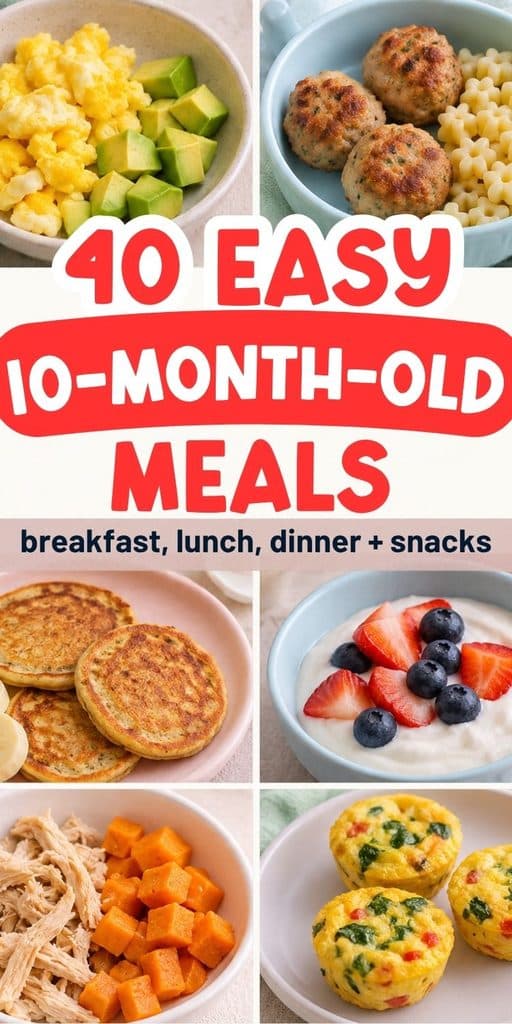
I’ve put together 40 easy 10-month-old baby food meals, including breakfast, lunch, dinner, and snack ideas. You’ll also find a sample feeding schedule, simple recipes, and tips for making mealtime a little easier.
Whether your baby loves finger foods or still prefers a spoon, there are plenty of ideas here to help you get through the week without making an entirely separate menu.
Quick note: Every baby develops eating skills at their own pace. Always prepare foods in a texture and size appropriate for your baby’s abilities, supervise eating, and check with your pediatrician if you have questions about feeding, allergies, or swallowing.
Feeding Your 10-Month-Old Baby Food Meals: Schedule and How Much
By 10 months, many babies are eating three solid meals a day, sometimes with a snack or two mixed in.
Breast milk or formula is still an important part of their daily nutrition, so solids aren’t meant to completely replace milk feedings just yet.
You might notice your baby eating more at breakfast one day and barely touching it the next. That’s normal!
How many meals should a 10-month-old eat?
A good goal for many babies this age is:
- Three meals a day: breakfast, lunch, and dinner
- One or two snacks if your baby is hungry between meals
- Regular breast milk or formula feedings throughout the day
You don’t need to force a certain number of bites or ounces of food at every meal. Follow your baby’s hunger and fullness cues.
The CDC recommends offering food or drinks about every two to three hours, adjusting the routine to your baby’s needs.
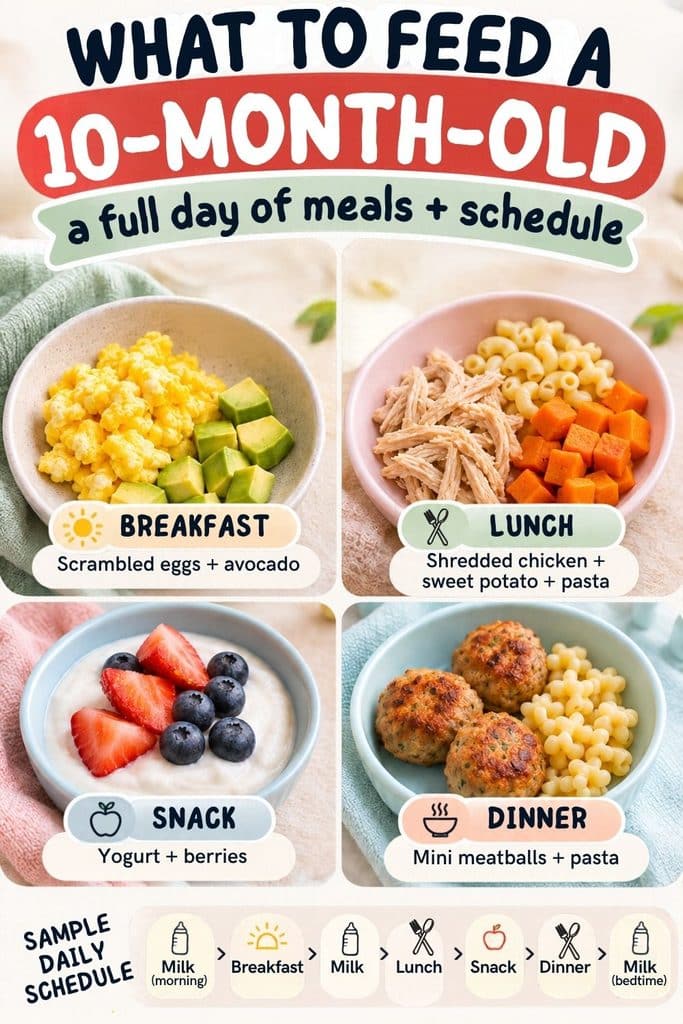
Sample 10-month-old feeding schedule
Here’s an example of what a day might look like.
| Time | Feeding |
|---|---|
| 7:00 AM | Breast milk or formula |
| 8:00 AM | Breakfast |
| 10:00 AM | Breast milk or formula |
| 11:30 AM | Lunch |
| 2:00 PM | Breast milk or formula |
| 3:00 PM | Optional snack |
| 5:30 PM | Dinner |
| 7:00 PM | Breast milk or formula before bed |
This is just an example! Your baby’s schedule will depend on naps, appetite, and how often they nurse or take a bottle.
How much should a 10-month-old eat?
There’s no perfect amount that every 10-month-old should eat.
Start with a tablespoon or two of each food and offer more if your baby is interested. Some babies will eat a surprising amount, while others are still learning and exploring.
Watch for signs that your baby is finished, like turning their head, closing their mouth, pushing food away, or losing interest.
And remember, playing with food is part of learning how to eat!
Best Foods for a 10-Month-Old Baby
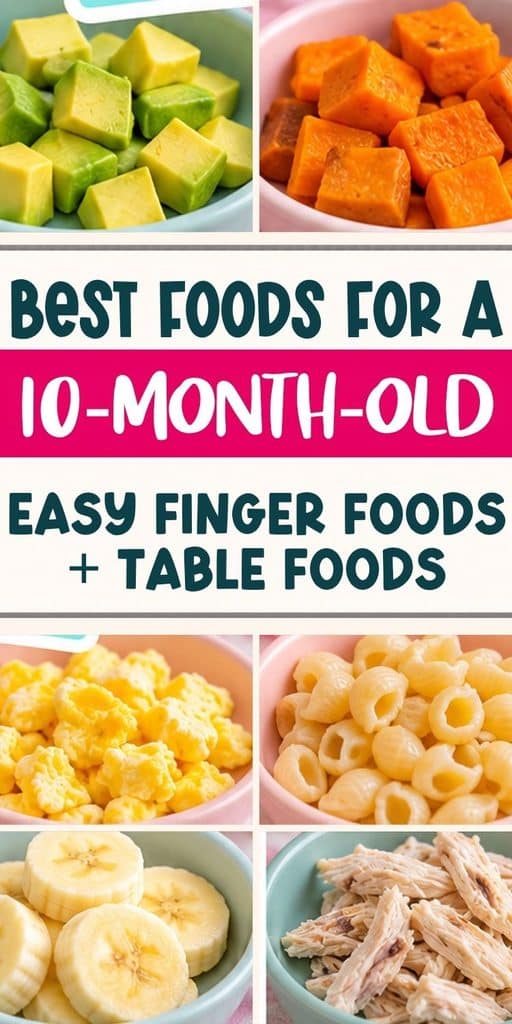
One of the best things about this stage is that your baby’s menu can start looking a lot more like yours.
You don’t need fancy baby food products or special ingredients. Many everyday foods work beautifully when they’re cooked until soft and prepared appropriately.
Fruits
Soft fruits are great for breakfast, snacks, or adding something naturally sweet to a meal.
Try:
- Ripe bananas, mashed or served in manageable pieces
- Ripe avocado
- Soft, peeled pears
- Cooked apples
- Ripe peaches without the pit
- Mashed blueberries
- Soft strawberries, prepared appropriately
- Unsweetened applesauce
Hard fruits should be cooked until soft, and round fruits like blueberries need to be flattened or cut into safe pieces.
Vegetables
Vegetables are easy to add to almost any meal, especially when you cook them ahead of time.
Good options include:
- Soft sweet potatoes
- Well-cooked carrots
- Steamed broccoli
- Mashed peas
- Soft zucchini
- Butternut squash
- Cooked spinach
- Mashed cauliflower
Aim for vegetables that are soft enough to mash easily with a fork. Avoid raw, crunchy vegetables that are difficult to chew.
Protein-rich foods
Protein foods are especially helpful because many also provide iron, an important nutrient during your baby’s first year.
Some easy choices are:
- Fully cooked scrambled eggs
- Finely shredded chicken
- Moist ground turkey or beef
- Soft, mashed lentils
- Mashed beans
- Fully cooked, boneless salmon
- Soft tofu
- Thinly spread or thinned smooth nut butters
Try pairing an iron-rich food with fruits or vegetables containing vitamin C, which can help with iron absorption.
Grains and dairy
You can also offer a variety of grains and pasteurized dairy products.
A few easy options include:
- Soft oatmeal
- Well-cooked pasta
- Soft rice mixed with moist foods
- Whole-grain toast prepared appropriately
- Baby-friendly pancakes
- Plain, unsweetened whole-milk yogurt
- Pasteurized cheese
- Ricotta or cottage cheese
Dairy foods such as yogurt and cheese can be included before your baby’s first birthday, but cow’s milk should not replace breast milk or formula as a main drink before 12 months.
How to prepare food safely
Before we get to the meals, let’s talk about texture.
At 10 months, some babies manage soft, finely chopped foods, while others still need mashed textures or larger soft pieces they can hold and gnaw. What matters most is your baby’s actual eating ability.
A few helpful rules:
- Cook firm vegetables until they mash easily with a fork.
- Make sure meats are fully cooked, tender, moist, and finely shredded or minced.
- Remove all bones, skin, and tough pieces from fish and meat.
- Mash beans and flatten round foods like blueberries.
- Avoid hard, sticky, round, or chewy foods that could block the airway.
- Keep your baby seated upright and supervised during every meal.
Never serve whole nuts, popcorn, whole grapes, raw carrot rounds, or thick spoonfuls of nut butter.
The CDC’s choking-prevention guide is a helpful resource for learning how to prepare foods safely.
40 Easy 10-Month-Old Baby Food Meals for Breakfast, Lunch, Dinner, and Snacks
Now for the fun part!
These 40 meal ideas use simple ingredients, don’t require fancy cooking skills, and can easily be adjusted based on what your baby already likes.
You’ll find 10 breakfasts, 10 lunches, 10 dinners, and 10 snacks, so you can mix and match throughout the week.
Remember to adjust the texture, moisture, and size of each food for your baby’s current skills.
10-Month-Old Breakfast Ideas
Breakfast doesn’t need to be complicated. In fact, some of the easiest baby breakfasts take just a few minutes to put together.
1. Scrambled Eggs and Avocado
Soft scrambled eggs and ripe avocado make a simple breakfast with protein and healthy fats.
Cook the eggs completely while keeping them soft, and serve with mashed avocado or pieces your baby can manage.
2. Banana Oat Pancakes
These easy pancakes are made with mashed banana, oats, and egg. They’re naturally sweet without any added sugar!
Make small pancakes, cook them through, and serve soft pieces or strips based on your baby’s eating skills.
3. Blueberry Oatmeal
Warm oatmeal is an easy breakfast, especially on busy mornings.
Cook oats until soft, then stir in mashed blueberries. Add a little water, breast milk, or prepared formula after cooking if needed to reach a comfortable consistency.
4. Soft French Toast
French toast is a fun way to change up your baby’s breakfast.
Dip whole-grain bread in beaten egg with a splash of milk and cinnamon, then cook thoroughly. Cut into soft, manageable pieces and skip the syrup.
5. Egg and Spinach Muffins
Mini egg muffins are one of my favorite make-ahead breakfast ideas because you can prepare several at once.
Mix eggs with finely chopped, cooked spinach and bake in a mini muffin pan until fully set. Break into soft pieces before serving.
6. Mashed Banana and Yogurt
This is perfect for mornings when you don’t feel like cooking anything.
Mash a ripe banana into plain, unsweetened whole-milk yogurt. You can serve it with a spoon or let your baby practice using a preloaded spoon.
7. Sweet Potato Breakfast Hash
Sweet potatoes aren’t just for dinner!
Cook small pieces of sweet potato until very soft and mix with finely chopped, fully cooked scrambled egg. Mash the mixture a little if your baby needs a softer texture.
8. Ricotta and Soft Pear
Ricotta cheese has a creamy texture that’s easy to pair with fruit.
Mix plain, pasteurized ricotta with mashed ripe pear or peeled, cooked pear. Add a sprinkle of cinnamon for a little extra flavor.
9. Pumpkin Oat Pancakes
If your baby likes banana pancakes, try a pumpkin version!
Combine plain pumpkin puree with egg and finely ground oats, then cook small pancakes until fully done. Serve them soft without syrup or honey.
10. Soft Toast with Nut Butter
Toast with peanut or almond butter can make an easy breakfast when the ingredients are prepared safely.
Use soft, lightly toasted bread with a very thin layer of smooth nut butter, or thin the nut butter with water and mix it into a soft food. Never offer thick globs of nut butter.
If this is your baby’s first time trying the nut butter, follow appropriate allergen-introduction guidance.
10-Month-Old Lunch Ideas
Lunch can be one of the hardest meals to figure out, especially when you’re home with a baby all day.
These easy lunches use leftovers, simple proteins, and vegetables you can prepare ahead of time.
11. Shredded Chicken and Sweet Potato
This is a great way to use leftover chicken from a family dinner.
Finely shred fully cooked, tender chicken and mix it with mashed sweet potato to keep everything moist. Add a little water if needed.
12. Avocado Egg Salad
Egg salad doesn’t have to involve mayonnaise or a complicated recipe.
Mash a fully cooked hard-boiled egg with ripe avocado until the mixture is soft. Serve on a spoon or spread thinly on soft toast pieces.
13. Soft Pasta with Peas
Pasta makes an easy lunch because you can cook enough for the whole family.
Use small, very soft pasta shapes and mix with well-cooked, mashed peas and a little olive oil. Make sure everything is moist and easy to manage.
14. Black Bean and Cheese Quesadilla
Quesadillas can work for babies when the tortilla and filling are soft enough.
Spread mashed black beans and a little pasteurized shredded cheese inside a soft tortilla, then warm until the cheese melts. Serve soft, non-chewy pieces, or offer the mashed filling separately.
15. Lentil and Vegetable Mash
Lentils are affordable, easy to prepare, and a helpful source of iron.
Cook lentils until very soft, then mix with mashed carrots or sweet potatoes. Add water as needed for a soft, scoopable texture.
16. Chicken and Avocado Rice Bowl
This is a simple baby version of a rice bowl.
Mix very soft, moist rice with finely shredded chicken and mashed avocado. Keep everything well combined so the rice isn’t dry or difficult to manage.
17. Broccoli and Cheese Egg Bites
These little bites are great when you have leftover cooked broccoli.
Mix finely chopped, very soft broccoli with egg and a little cheese, then bake in a mini muffin pan until completely set. Break into soft pieces to serve.
18. Salmon and Mashed Potatoes
Salmon is an easy protein to include in your baby’s meals.
Cook the salmon completely, carefully remove every bone, and flake it into tiny, moist pieces. Mix with creamy mashed potatoes for an easy lunch.
19. Hummus and Soft-Cooked Vegetables
Hummus makes a quick lunch, especially when paired with vegetables.
Choose a smooth, low-sodium hummus and serve a small amount with very soft zucchini, carrots, or sweet potato. Mash the vegetables or prepare safe pieces based on your baby’s skills.
20. Turkey and Butternut Squash Mash
Ground turkey and butternut squash make a simple, filling meal.
Cook the turkey thoroughly, making sure there are no large or tough chunks. Mix finely minced turkey with mashed squash until the texture is soft and moist.
10-Month-Old Dinner Ideas
Dinner is a great opportunity to introduce your baby to the same foods everyone else is eating.
You may only need to set aside a small portion before adding extra salt, sauces, or toppings.
21. Turkey Meatballs with Pasta
Soft turkey meatballs are one of the easiest baby-friendly dinners to prepare ahead of time.
Make small, fully cooked meatballs and break them into very fine, moist pieces. Serve with soft pasta and a little unsalted tomato sauce.
22. Shredded Chicken and Mashed Potatoes
This is a simple comfort-food dinner that works especially well with leftovers.
Mix finely shredded, tender chicken into creamy mashed potatoes. Add soft cooked carrots or peas for extra variety.
23. Mini Beef and Vegetable Patties
Ground beef is a useful iron-rich food for babies.
Mix ground beef with finely grated zucchini and cook small patties until fully done. Crumble or mince the patties and add moisture before serving.
24. Soft Pasta with Meat Sauce
Your baby can enjoy a simple version of spaghetti night!
Cook pasta until very soft and mix with finely crumbled, fully cooked ground meat and a smooth, low-sodium tomato sauce. Cut longer noodles into manageable lengths.
25. Lentil and Sweet Potato Stew
A warm bowl of lentils and sweet potatoes makes an easy meatless dinner.
Simmer lentils with sweet potato and water or unsalted broth until everything is very soft. Mash lightly for a thicker texture.
26. Chicken and Vegetable Soup
You can turn a basic chicken soup into a baby-friendly dinner.
Use very tender, finely shredded chicken, soft vegetables, and well-cooked noodles. Serve mostly the soft solids with a little broth to keep them moist.
27. Salmon Cakes with Avocado
Salmon cakes are a fun change from serving plain fish.
Combine fully cooked, boneless salmon with mashed potato and egg, then cook small patties thoroughly. Break into soft pieces and serve with mashed avocado.
28. Tofu with Rice and Zucchini
Soft tofu is an easy protein option that doesn’t require much preparation.
Combine soft, cooked tofu with well-cooked zucchini and moist rice. Mash or chop everything into a texture your baby can manage.
29. Chicken and Spinach Patties
These make a great freezer-friendly dinner.
Mix finely minced chicken with cooked, finely chopped spinach and a little egg, then cook completely. Serve in soft, moist pieces with mashed sweet potato.
30. Bean and Vegetable Burrito Bowl
This is an easy way to turn taco night into a baby-friendly dinner.
Combine mashed, low-sodium beans with very soft rice, cooked vegetables, and avocado. Keep the mixture moist and skip spicy sauces and salty toppings.
Easy 10-Month-Old Snack Ideas
Snacks don’t have to be elaborate. Sometimes a little fruit, yogurt, or a leftover mini muffin is all you need.
Offer a snack when your baby is hungry between meals, and remember that breast milk or formula is still part of the daily routine.
31. Banana Oat Mini Muffins
Mini banana muffins are perfect for making ahead.
Use mashed banana, oats, and egg to make soft muffins without added sugar. Break them into manageable pieces before serving.
32. Yogurt and Mashed Berries
This snack takes about a minute to prepare.
Mix plain, unsweetened whole-milk yogurt with mashed strawberries, raspberries, or blueberries. Make sure round berries are completely mashed or flattened.
33. Avocado and Soft Toast
Ripe avocado is easy to serve and doesn’t require any cooking.
Mash the avocado and spread it on soft, lightly toasted bread. Serve safe pieces or let your baby practice with a preloaded spoon.
34. Soft-Cooked Apple with Cinnamon
Cooked apples are a great alternative when raw apples are still too firm.
Peel and cook apple pieces until they mash easily with a fork, then sprinkle with cinnamon. Let cool before serving.
35. Mini Sweet Potato Pancakes
Leftover mashed sweet potatoes can become a quick snack.
Mix with egg and finely ground oats, then cook small pancakes until fully done. Serve soft pieces.
36. Ricotta and Mashed Peach
This creamy combination makes a naturally sweet snack.
Mash a soft, ripe, peeled peach and combine with pasteurized ricotta cheese. You can use cooked peach if the fresh fruit is too firm.
37. Soft Zucchini Fritters
Zucchini fritters are a good way to use an extra vegetable from the refrigerator.
Mix finely grated zucchini with egg and flour, then cook small fritters completely. Keep them soft rather than crispy.
38. Mashed White Beans and Avocado
This snack is filling and takes almost no time.
Mash low-sodium, rinsed white beans until smooth and mix with ripe avocado. Add a little water if needed.
39. Soft Pear and Cottage Cheese
Cottage cheese and fruit make an easy snack with protein.
Use pasteurized, lower-sodium cottage cheese with mashed ripe pear. If the cheese curds are large, mash them to a texture your baby can manage.
40. Banana and Peanut Butter Mash
Banana and peanut butter are a delicious combination, and you don’t even need a blender.
Mix mashed ripe banana with a small amount of smooth peanut butter that has been thinned until it isn’t sticky. Serve with a spoon, never as a thick glob.
If peanuts are new to your baby, introduce them according to your pediatrician’s guidance, especially if your baby has severe eczema or an existing food allergy.
A Sample Day of 10-Month-Old Baby Food Meals
Sometimes it’s easier to see a full day of food rather than trying to put individual ideas together.
Here’s one example of what your 10-month-old might eat throughout the day.
Breakfast
Scrambled eggs, avocado, and banana
Serve soft, fully cooked scrambled eggs with mashed avocado and ripe banana.
Offer breast milk or formula according to your baby’s usual feeding routine.
Morning feeding
Breast milk or formula
Your baby may still want a milk feeding between breakfast and lunch.
Lunch
Soft pasta with peas
Mix well-cooked pasta with mashed peas and a little olive oil.
You could also add some finely shredded chicken if your baby is hungry for more.
Afternoon snack
Yogurt with mashed blueberries
Serve a small portion of plain whole-milk yogurt with mashed blueberries.
If your baby isn’t interested in a snack, there’s no need to force it.
Dinner
Turkey meatballs, sweet potatoes, and broccoli
Serve finely crumbled, moist turkey meatballs with mashed sweet potato and very soft broccoli.
This is a great example of a meal the whole family can enjoy with a few simple adjustments.
Before bed
Breast milk or formula
Continue your usual bedtime feeding routine.
Remember, this isn’t a menu you need to follow exactly. It’s just an example to show how a few basic foods can make a full day of meals.
4 Easy 10-Month-Old Baby Food Recipes
You don’t need to spend hours in the kitchen making homemade baby food.
These four simple recipes use everyday ingredients and can help you get several meals or snacks ready at once.
1. Three-Ingredient Banana Oat Pancakes
These soft pancakes are naturally sweet and work for breakfast or snacks.
Ingredients
- 1 ripe banana
- 1 egg
- 1/4 cup finely ground oats
- Optional: pinch of cinnamon
Instructions
- Mash the banana in a bowl until smooth.
- Add the egg and beat until combined.
- Stir in the finely ground oats and cinnamon.
- Heat a lightly greased nonstick skillet over medium-low heat.
- Spoon small amounts of batter into the skillet.
- Cook approximately 2 to 3 minutes per side, adjusting as needed until fully cooked in the center.
- Allow to cool and serve in soft, manageable pieces.
These pancakes are also easy to freeze in individual portions.
2. Soft Turkey Meatballs
These baby-friendly meatballs are easy to pair with pasta, mashed potatoes, or vegetables.
Ingredients
- 1 pound ground turkey
- 1/2 cup finely grated zucchini, lightly squeezed
- 1 egg
- 1/4 cup finely ground oats or plain breadcrumbs
- 1/2 teaspoon garlic powder
Instructions
- Preheat the oven to 375°F.
- Combine all ingredients in a large bowl.
- Mix gently until everything is combined.
- Form small meatballs and place them on a parchment-lined baking sheet.
- Bake approximately 15 to 20 minutes, or until the center reaches 165°F.
- Let cool, then finely crumble or mince and moisten before serving.
For your baby, serve the meatballs in a texture that’s easy to manage rather than offering a whole, round meatball.
3. Mini Spinach and Egg Muffins
These little egg muffins are great for breakfast, lunch, or a quick snack.
Ingredients
- 4 eggs
- 1/4 cup finely chopped, cooked spinach, with excess water squeezed out
- 2 tablespoons pasteurized shredded cheese
- 2 tablespoons milk
Instructions
- Preheat the oven to 350°F.
- Lightly grease a mini muffin pan.
- Whisk the eggs and milk together.
- Stir in the cooked spinach and cheese.
- Pour the mixture into the prepared muffin cups.
- Bake approximately 12 to 15 minutes, or until the centers are completely set.
- Cool and break into soft, manageable pieces.
You can also add other finely chopped, fully cooked vegetables for variety.
4. Sweet Potato and Zucchini Fritters
These are a simple way to serve vegetables in a new form.
Ingredients
- 1/2 cup cooked, mashed sweet potato
- 1/2 cup finely grated zucchini, squeezed to remove excess moisture
- 1 egg
- 2 tablespoons flour
- Optional: pinch of cinnamon
Instructions
- Mix the mashed sweet potato and zucchini in a bowl.
- Add the egg, flour, and cinnamon.
- Stir until combined.
- Heat a lightly greased nonstick skillet over medium-low heat.
- Drop small spoonfuls of batter into the pan and gently flatten.
- Cook approximately 3 to 4 minutes per side, adjusting as needed until fully cooked through.
- Let cool and serve soft pieces.
These fritters work for lunch, dinner, or snacks and pair well with plain yogurt.
Make-Ahead and Freezer 10-Month-Old Baby Food Meals
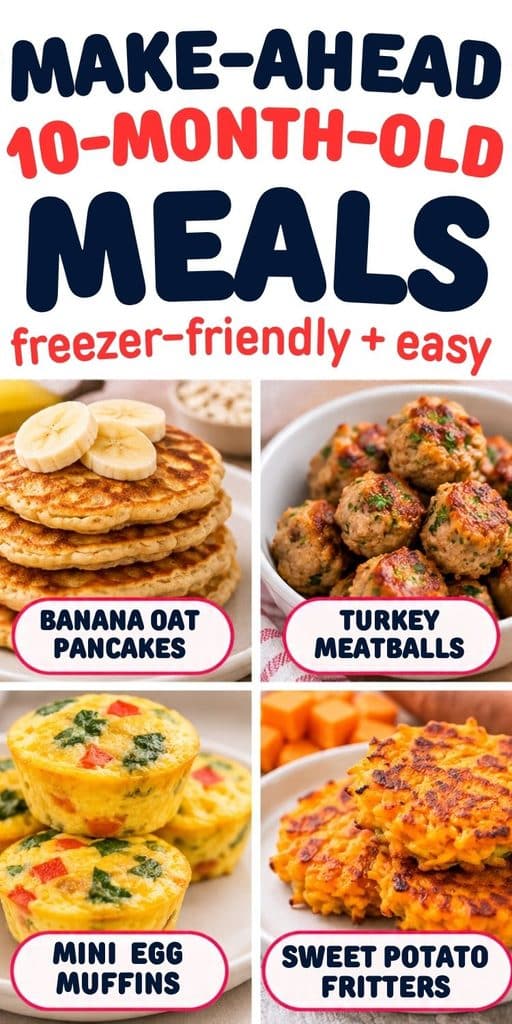
One of the easiest ways to make feeding your 10-month-old less stressful is to prepare a few foods ahead of time.
You don’t need a huge meal-prep session or a freezer full of complicated recipes.
Even making an extra batch of pancakes or cooking a few vegetables while you’re preparing dinner can make a big difference.
Baby foods that freeze well
Some of my favorite foods to prepare ahead include:
- Banana oat pancakes
- Turkey meatballs
- Mini egg muffins
- Sweet potato fritters
- Cooked lentils
- Mashed sweet potatoes
- Cooked vegetables
- Soft chicken and vegetable mixtures
Freeze foods in small, individual portions so you can take out only what you need.
How to store homemade baby meals
According to FoodSafety.gov, homemade baby foods can generally be stored in the refrigerator for one to two days or in the freezer for one to two months.
For mixed dishes containing meat, eggs, or dairy, always use appropriate food-safety guidance and store them promptly.
A few helpful tips:
- Refrigerate cooked food promptly in clean, covered containers.
- Label freezer portions with the food and date.
- Thaw frozen baby food safely in the refrigerator or during reheating, not on the counter.
- Reheat thoroughly, stir to distribute heat, and let cool to a safe temperature before serving.
- Discard food left on your baby’s plate rather than saving it for another meal.
My favorite shortcut: make one family meal
You don’t need to cook two completely different dinners every night.
If you’re making chicken, sweet potatoes, and broccoli for the family, you can often serve the same ingredients to your baby after adjusting the texture.
Set aside your baby’s portion before adding excess salt or salty sauces, and prepare it in a way that’s appropriate for their eating abilities.
It’s one less thing to think about at dinnertime!
Tips for Making 10-Month-Old Baby Food Meals Easier
Even with plenty of meal ideas, feeding a baby can be unpredictable.
Here are a few tips that can make this stage feel a little less overwhelming.
Keep a few easy foods ready
Having basics like bananas, avocados, eggs, plain yogurt, and frozen vegetables on hand makes it much easier to put together a quick meal.
Not everything needs to be homemade from scratch.
Offer familiar foods with new foods
If your baby loves sweet potatoes, try serving them alongside a small amount of chicken or lentils.
Offering something familiar can help keep mealtime comfortable while your baby explores new flavors.
Don’t worry about making every plate perfect
Some meals will have several food groups, and others might just be eggs and fruit.
Look at the variety your baby eats over time rather than stressing about every individual meal.
Let your baby practice self-feeding
If your baby wants to grab the spoon or pick up food with their fingers, give them opportunities to practice.
It might make a mess, but those experiences help develop important eating skills.
If you’re looking for more ways to introduce finger foods, check out my Baby-Led Weaning First Foods guide for ideas on getting started with self-feeding.
Keep offering foods without pressure
Your baby might spit out broccoli today and happily eat it another day.
You can continue offering foods in different safe preparations without forcing your baby to take bites.
And if your baby is still enjoying purees, that’s okay too!
Frequently Asked Questions About 10-Month-Old Baby Food Meals
How many meals should a 10-month-old eat each day?
Many 10-month-old babies eat three meals a day, with one or two snacks depending on their appetite and feeding schedule.
Breast milk or formula should continue throughout the day because it remains an important source of nutrition until your baby’s first birthday.
What finger foods can a 10-month-old eat?
Good options include soft scrambled eggs, well-cooked pasta, ripe avocado, soft pancakes, and very tender vegetables.
The size and texture should match your baby’s chewing and swallowing skills, and all foods should be served while your baby is sitting upright and supervised.
Can my 10-month-old eat the same food as the family?
Often, yes!
Many family meals can be adapted for your baby by removing bones, cooking ingredients until soft, reducing added salt, and preparing food in safe textures.
You may need to leave out certain ingredients or serve components separately.
What if my 10-month-old still prefers purees?
That’s okay! Not every baby progresses through food textures at exactly the same pace.
You can continue offering familiar purees while gradually introducing thicker, mashed, or soft foods as your baby is ready.
If your baby consistently struggles with textured foods, coughs during meals, or has difficulty swallowing, talk with your pediatrician.
What’s the difference between gagging and choking?
Gagging is a protective reflex that can happen while babies learn to handle different textures. A gagging baby may cough, make sounds, or push food forward in their mouth.
Choking means food is blocking the airway and can be life-threatening. A choking baby may be unable to cry, cough effectively, or breathe, and may become silent.
If your baby is choking, act immediately using age-appropriate infant choking first aid and call emergency services. Avoid blind finger sweeps, and consider taking an infant CPR and choking-response class before starting or progressing solids.
What foods should a 10-month-old avoid?
Some foods aren’t safe for babies this age.
Avoid:
- Honey, including honey added to baked foods, before 12 months
- Whole nuts
- Popcorn
- Whole grapes or cherry tomatoes
- Raw, hard vegetables
- Hard chunks of fruit
- Thick spoonfuls of peanut butter
- Large pieces of meat or cheese
- Undercooked eggs, meat, or fish
- Unpasteurized dairy products
Also avoid using cow’s milk as the main drink before 12 months, and limit foods with added sugar or excess sodium.
Common allergens such as eggs, peanuts, wheat, soy, and dairy don’t automatically need to be avoided. They can often be introduced in age-appropriate forms, but babies with certain allergy risk factors may need an individualized plan from their pediatrician.
Does my 10-month-old need teeth to eat finger foods?
Not necessarily!
Babies can manage many soft foods using their gums, even before they have a full set of teeth.
The important thing is offering appropriately soft foods that match your baby’s oral-motor skills and avoiding foods that require strong chewing.
What if my baby refuses a meal?
Try not to panic if your baby isn’t interested in everything you serve.
Appetites can change from day to day, and learning to eat takes practice. Offer meals without pressure and watch your baby’s hunger and fullness cues.
If your baby is regularly refusing food, not gaining weight as expected, or having difficulty eating, check in with your pediatrician.
Final Thoughts on 10-Month-Old Baby Food Meals
Feeding your 10-month-old doesn’t have to mean making complicated recipes or spending hours in the kitchen.
Sometimes the easiest meals are things you’re already cooking for yourself, like scrambled eggs, pasta, chicken, or roasted vegetables, with a few adjustments to make them appropriate for your baby.
Start with a handful of meals that seem manageable and rotate through them throughout the week. As your baby gets more comfortable with different textures and flavors, you can keep adding new foods.
And remember, you don’t have to make every meal perfect to help your baby develop healthy eating habits.
Save these 40 easy 10-month-old baby food meals for the next time you’re staring into the refrigerator wondering what to make!
More Baby Feeding Guides You’ll Love
Looking for more easy meal ideas as your little one grows? Here are a few more guides to help make feeding your baby and toddler a little easier!
- 9 Month Old Baby Food – Easy food and puree ideas for babies who are still getting comfortable with solids.
- Baby-Led Weaning First Foods – A helpful guide to introducing finger foods and encouraging self-feeding.
- Easy Toddler Dinner Ideas – Simple, family-friendly dinners to try as your baby grows into the toddler stage.
- Healthy Snacks for Kids – Easy snack inspiration for the busy years ahead.
Helpful Feeding Resources
For additional guidance on infant feeding and food safety, visit: